| Welcome to our Spring 2026 newsletter! In this edition, we are sharing recent firm highlights, as well as introductions to some of our newest attorneys and staff. |
|
|
|
|
|
|
|
|
|
Welcome to our Spring 2026 newsletter! In this edition, we are sharing recent firm highlights, as well as introductions to some of our newest attorneys and staff. We are also exploring issues at the intersection of litigation and culture in the form of hopefully insightful articles drafted by our associates. We hope you enjoy our quarterly offering. Please send any thoughts, comments and concerns to info@salisianllp.com. Thank you and happy spring!
|
|
|
|
|
|
|
|
|
|
|
Firm News

|
|
Salisian LLP partner, Neal Salisian, along with counsel at Yoka Smith LLP, obtained a full defense verdict on behalf of one of its business clients in a recent jury trial in Santa Monica. The lawsuit was seeking eight-figure damages against one of Salisian LLP's business clients, but the defense verdict eliminated all liability.
|
|
|
|
Salisian LLP has been recognized in the Chambers and Partners Spotlight 2026 California Guide for expertise in Litigation: General Commercial.
|
|
|
|
As part of our ongoing expansion, we recently welcomed new associate Joshua Su, legal secretary Winni Chan, and Human Resources manager Katherine Lindquist.
|
|
|
|
We have continued our ongoing commitment to growing our firm culture with our social events. Most recently, we celebrated the holidays at Malbec Arts District and commemorated birthdays and anniversaries. Special congratulations to partner Tyler Sanchez for 5 years with the Firm!
|
|
|
|
Our attorneys and staff participated in a recent Downtown LA Food Tour as a chance to connect with each other and the community around our offices.
|
|
|
|
As every year, our entire team engaged in some friendly inter-office competition with a firm-wide March Madness bracket and we look forward to celebrating the winner with a trophy!
|
|
|
In the Spotlight: The Same Five Questions with New Associate Joshua Su
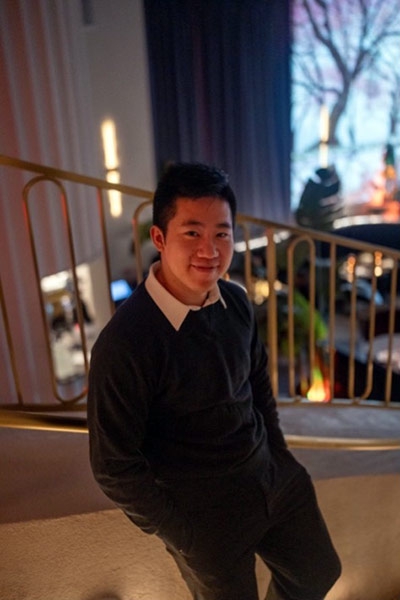 In late 2025, we were joined by a new associate, Joshua Su. Since our associates work closely with clients and firm friends, we like to ask newcomers the same five questions to help break the proverbial ice. Below, please learn a little more about Joshua. In late 2025, we were joined by a new associate, Joshua Su. Since our associates work closely with clients and firm friends, we like to ask newcomers the same five questions to help break the proverbial ice. Below, please learn a little more about Joshua.
What made you want to be an attorney and what drew you to Salisian LLP at this stage in your career?
Put simply, I wanted to do meaningful work. To me, meaning comes from delivering practical, tangible results for others. The practice of law provides that opportunity: it allows me to fiercely advocate for my clients and help resolve real problems with real consequences. Before law, I pursued a career as a classical concert pianist. While that chapter shaped my discipline and analytical thinking, I ultimately found that I wanted to apply those skills in a setting where advocacy and strategy directly impact people's lives. Law became the natural outlet for that drive.
I was drawn to Salisian LLP because of its reputation as a premier commercial litigation boutique and its emphasis on substantive responsibility and mentorship. At this stage in my career, I was looking for a place where I could sharpen my skills through hands-on litigation experience while learning directly from seasoned trial lawyers. The people at Salisian — partners, associates, and staff alike — are thoughtful, capable, and generous with their time, and that culture of teaching and collaboration is exactly what I was seeking.
What do you love most about the practice of law? What do you find the most challenging?
What I love most about practicing law is that it is a lifelong pursuit. There is always more to learn, refine, and master. I'm particularly drawn to advocacy-crafting arguments, engaging with complex legal issues, and helping shape outcomes that matter to clients and, at times, the broader legal landscape.
The most challenging aspect, especially as a junior attorney, is recognizing the limits of what you don’t yet know. That uncertainty can be daunting, but it is also motivating. With strong mentorship and repetition, those gaps close quickly, and I value being in an environment where questions are encouraged and learning is constant.
What advice have you received in your career that made the most meaningful impact?
One of the most meaningful pieces of advice I've received is never to self-select out of opportunities. Don't be the person who tells yourself "no" before anyone else has the chance to say "yes." As the great Canadian hockey player Wayne Gretzky said, "You miss 100% of the shots you don't take."
Growth often comes from stepping into discomfort and letting others evaluate your readiness rather than assuming your own limits. It's advice I've carried with me throughout my career and now share with those I mentor.
Who are your role models?
Rather than a single role model, I'm inspired by specific traits I've seen in mentors and colleagues I respect. These include a strong work ethic, intellectual curiosity, attention to detail, and the ability to communicate clearly and persuasively—both in writing and orally. I also admire lawyers who remain grounded and generous with their knowledge while continually pushing themselves to improve.
What do you like to do in your free time?
Outside of work, I enjoy powerlifting, going to the gym, and practicing Brazilian Jiu-Jitsu. I also like going on long drives and exploring new food spots I come across on my Instagram or TikTok feed.
|
|
In This Edition
Below, please enjoy three articles drafted by our thoughtful and talented associates, on some of the key issues they've noted in recent months and their analysis on how best to approach them.
|
|
|
|
|
|
|
|
|
Copyright and Licensing Issues With AI Use
By Gabriela Perez, Associate
|
|
|
For the past decade, there has been international concern surrounding the use and regulations of Artificial Intelligence ("AI"). AI has grown and exponentially increased its performance faster than governments around the world have been able to regulate it. With this rapid growth, small businesses have not only found AI tools helpful, but indispensable for marketing and operations.
Although different business sectors have different AI programs available, one aspect impacting the use of AI in small businesses is the generation of intellectual property. Whether using AI to create content, logos, and other marketing media, small businesses must ensure they keep the considerations below in mind as they face risks when relying on AI without understanding the boundaries and consequences of that technology.
This article highlights the key considerations every small business owner should keep in mind when using AI for marketing, including concerns relating to copyright protection and copyright infringement.
Marketing Material Generated Through AI Is Not Automatically Protected Under Copyright Laws
At the moment, U.S. copyright laws only protect human-created expression in a tangible form, and do not extend protection to content generated by AI software, despite a user drafting a prompt. Therefore, if a small business chooses to use AI to completely create a logo or a marketing image, the content may not only be unprotected, but the image may also fall into public domain. While any human (non-AI) contributions such as editing or transforming the AI-generated output can potentially be protected, the use of AI in the creation of the image could lead to competitors or other businesses copying any AI-generated content with little to no legal recourse.
In the event your business relies heavily on AI to generate its promotional and marketing materials, you may struggle to enforce your rights or prevent misuse. To mitigate this issue, it is imperative to ensure that there is a meaningful, human (non-AI) role in the creation of the materials.
Marketing Material Generated Through AI May Inadvertently Lead To Copyright Infringement
Although AI is generally "user-friendly," it is important for small businesses to understand the way AI produces work to ensure that they do not accidentally infringe on existing copyrights. This is because the majority of AI "learns" from existing datasets, which includes copyrighted materials. AI may incorporate these existing copyright materials, or materials that heavily resemble or replicate someone else's copyrighted work.
Therefore, if you are using AI to create a slogan, jingle, or image, AI may use pre-existing copyrights to generate that for your business. Even if the similarity is unintentional, a small business could not only lose its ability to copyright such work, but may also be facing copyright infringement claims.
To reduce this risk, a small business can: (1) use reputable AI platforms with clear data-use disclosures, (2) carefully review all AI outputs before using any materials, (3) use specifically tailored language when prompting AI to generate materials, (4) run reverse image or phrase searching to track whether there are any pre-existing materials that look familiar, and (5) ensure that the small business creators have read the AI-platform's Terms of Service prior to use.
In effect, treat AI output as you would content from a contractor or any work-for-hire – review, research, verify, and revise before you ultimate utilize the material and post it publicly.
Small Businesses Should Familiarize Themselves with Open vs. Proprietary AI
Not all AI tools are created equally or operate in the same way. Understanding the difference between open and proprietary systems can help a business assess risk, privacy, and licensing obligations.
First, open-source AI publish their model architecture and training data, which offers more customizable and often free or lower cost services. However, using open-source AI has a higher risk of accidentally outputting copyrighted material, offers less support, and provides fewer contractual protections.
Second, proprietary (closed) AI are systems that are privately developed and maintained, which training data is usually licensed or vetted, and unsurprisingly, comes at a higher cost for its users. The proprietary AI system affords its users stronger contractual protections which often include indemnification, has clearer terms of use, and is more stable from a risk-management perspective.
Using the two types of AI in tandem can provide businesses with a cost-effective way to generate marketing materials. For example, using open-source AI to brainstorm initial ideas while using proprietary AI to create customer facing material may be a cost efficient way to lower risk.
In All AI Use Small Businesses Must Still Consider Licensing
To be clear, AI generated images, videos, or music, do not come "free and clear" for use. No matter what type of AI materials a business generates, businesses must still consider (1) what rights the AI company grants, (2) whether your materials contain copyrighted or trademarked elements, and (3) whether you can use the content across social media platforms.
In conclusion, while it is easy to see the potential for great benefits in AI use, businesses can and should take a step back and consider the risks associated with its use when creating marketing content.
|
|
|
|
|
|
|
|
|
California Enacts Sweeping Reforms to Service of Process
By Joshua Su, Associate
|
|
|
"Sewer service" - a term used to describe a rising practice among debt collectors of throwing documents "down the sewer" and falsifying affidavits of service, has increasingly undermined the due-process rights of California's most vulnerable residences. In response, the California Legislature has enacted AB 747, also known as the Service of Process Accountability, Reform and Equity (SPARE) Act, which represents the most significant modernization of California's service-of-process rules in years. The SPARE Act introduces major reforms to service requirements and default-judgment procedures to enhance fairness, transparency, and accountability.
The SPARE Act makes three principal changes to California's service-of-process framework: (1) a new, publicly available process server registry; (2) mandatory "hard evidence" documenting service attempts; and (3) a codified definition of "reasonable diligence."
To begin, each county must now create a publicly accessible registry for process servers. Process servers may only effectuate service in the counties they are registered in. This ensures that there is traceability, accountability, and verification of service from the outset.
The SPARE Act's most consequential change is its new requirement for objective, verifiable proof of service. Now, proofs of service must include a photograph of the exact door or entry point where service was attempted or completed, accompanied by the time, date, and even GPS coordinates of the location. This evidentiary upgrade is intended to eliminate disputes about whether service actually occurred and to deter fraudulent service practices.
The SPARE Act further codifies the definition of "reasonable diligence" when effectuating service of process. Now, the magic number is definitively "3": a process server must attempt personal service on 3 different occasions, on 3 different days, at 3 different times. In consumer debt-collection cases, at least one attempt must be at the defendant's residence. These changes replace previous, more flexible, case-law-driven standards with consistent statewide rules.
To further its goal of strengthening due process protections, the Legislature codified the California Supreme Court's precedent and expands the remedies for improper service.
Specifically, parties may now challenge default judgments void for lack of proper service at any time, eliminating previous time constraints. Furthermore, the Legislature has now flipped the burden of proof: on a motion to vacate a default judgment for improper service, the plaintiff must now affirmatively demonstrate that service complied with statutory requirements.
Although the SPARE Act's sweeping reforms do not become effective until January 1, 2027, businesses and practitioners should begin implementing changes now. Best practices include ensuring that each of the required service attempts is properly documented with photos, timestamps, and GPS data, and that records are maintained in a manner allowing for straightforward verification if service is later challenged. Thorough documentation will be critical to demonstrating compliance under the Act's more stringent evidentiary standards.
At Salisian LLP, we work with industry-leading process-service professionals to ensure that all service attempts meet these heightened requirements. If you have any questions about how the SPARE Act may affect your litigation procedures or business operations, we are here to guide you through these changes and safeguard your rights and interests.
|
|
|
|
|
|
|
|
|
One Season After Another: NIL Rights & Interpreting the Fine Print
By Jared Densen, Associate
|
|
|
"The flood gates are open; the lawsuits are coming!"
From broken promises to backroom deals, late night DMs, and fraudulent signings, college athletes have a lot more on their mind these days than just their sport and classes. Now that collegiate athletes are compensated for their name, image, and likeness ("NIL"), athletes and universities alike are finding out that with great rights come great responsibilities – and perhaps only attorneys can help them.
When the University of Cincinnati Bearcats and Duke University Blue Devils' 2025 football seasons were over, questions almost immediately arose about the landing spots for the two most important players on each team – quarterbacks Brendan Sorsby and Darian Mensah, respectively.
Although the "Transfer Portal" had not officially opened, Sorsby was linked to Texas Tech University, and Mensah was linked to the University of Miami (FL). Prior to the 2025 season, however, both Sorsby and Mensah played for Indiana University (Bloomington) and Tulane University, respectively. When the quarterbacks then moved on to the Bearcats and Blue Devils to begin the 2025 season, each quarterback signed two-year NIL deals worth millions of dollars, reportedly. These relationships were sealed in ink for 18 months, which covered the 2025 and 2026 college football seasons. What neither quarterback, nor their representatives, thought about when signing those agreements apparently were the longer-term implications: "What if new, better opportunities arise due to an incredible season? In the age of NIL and transfers, do we want to be committed for more than 1 season?" These are only two of the many questions college athletes must ask themselves, or have asked of them, when signing million-dollar agreements for their limited services (i.e., generally 4 collegiate seasons) in the current era.
Regardless of how one feels about the new one-year NIL collegiate athletic commitments, the desire for them (from athletes and universities) is not going away, until or unless the universities decide to enforce agreements that are beyond one season. In turn, this begs the question of whether college athletes will ever want – or should – sign NIL agreements for longer than one season.
Perhaps no other case highlighted this question better than that of Fernando Mendoza. Mendoza went from an unknown quarterback at the University of California, Berkeley to the presumed (at the time of writing) #1 overall pick in the 2026 NFL Draft. Should he be held to the constraints of a contract that did not correctly anticipate his exponential growth?
With millions thrown in their direction, along with potentially easier/better/greater path to the College Football Playoff, NFL Draft, or all of the above, Mensah and Sorsby decided (or perhaps were advised) to breach their respective agreements and seek "greener pastures." However, this time, the schools fought back. Both Cincinnati and Duke sued Sorsby and Mensah to block and/or stall them from leaving their programs.
Following Sorsby's transfer to Texas Tech, Cincinnati filed a lawsuit against Sorsby for allegedly breaching his NIL contract with the school after he refused to pay a $1 million NIL exit fee (i.e., buyout), which Cincinnati claims was a clause in the agreement. Specifically, Cincinnati was "seeking payment on a $1 million buyout from a multi-season revenue sharing deal between Sorsby and Cincinnati," according to a report by The Athletic. Cincinnati claims that Sorsby was contractually obligated to pay the amount within 30 days of transferring to Texas Tech.
According to an ESPN report, lawyers for Cincinnati claimed that Sorsby's representative "advised that Sorsby refuses to pay the University anything[.]" Further, Sorsby and Cincinnati's 18-month NIL agreement was set to expire December 15, 2026. The allegations continue to state that Sorsby "violated the terms of his NIL deal with Cincinnati when his image appeared on a large digital billboard in New York's Time Square announcing his commitment to Texas Tech."
Cincinnati made sure to point out that the agreement is mutually beneficial for quarterback and university: "Sorsby has benefited greatly by the NIL agreement he entered into with the University, along with the University’s sustained efforts to promote him and help establish him as a top collegiate quarterback... Now, the University seeks to enforce its rights under that same agreement and to recover the amount Sorsby is contractually obligated to pay." Cincinnati's position is exemplified by the "raise" Sorsby received from Texas Tech following his one season at Cincinnati. In hindsight, Cal would have liked to use that argument to keep Mendoza, or recoup part of any money they paid him.
Despite Cincinnati's efforts, Sorsby nonetheless put on his cowboy hat and boots and headed to Lubbock. Sorsby reportedly signed an NIL agreement with Texas Tech that will pay him between $4-$6 million this season alone, more than covering the $1 million buyout that Cincinnati is seeking. The case is still ongoing as of the date of this article.
Meanwhile, after leading an unlikely 7-5 Duke team to an ACC Title, Mensah and the Blue Devils had a weeklong divorce proceeding in the North Carolina court system. Similarly to Sorsby, Mensah's deal with Duke was set to expire in December 2026, but unlike Sorsby, Mensah did not transfer schools before Duke filed suit. Immediately after Mensah announced his intention to transfer, Duke responded by filing its lawsuit for breach of contract alleging their NIL agreement explicitly prohibited Mensah from transferring to another school or entering into an NIL deal with another school during the term of the Duke deal. It appears neither Mensah, nor his representatives, reviewed the Duke NIL deal before execution, or even before deciding to announce intentions to transfer. If that occurred, this messy divorce would likely never have occurred.
The case quickly resolved slightly over a week after it was filed – perhaps because Duke's lawyers crafted a strong contract. Mensah and Duke settled, with Mensah (or, more likely, the University of Miami, his new team) likely paying a significant buyout to Duke, in the range of millions.
In contrast to Sorsby and Mensah's immediate courting by new schools and their subsequent breaches of contract, the University of Washington's quarterback – Demond Williams – immediately signed a new one season NIL agreement with the Huskies, reportedly in the mid-$4 million range, which is near the top of the market for a college quarterback. However, vultures soon surrounded Williams. Rival recruiters, coaches, boosters, athletes, and/or other figures berated Williams either with poison against Washington or enticing offers to transfer to their schools. One of those offers eventually piqued Williams' interest, and he did an about-face and informed Washington he was leaving, only a few days after his newly minted deal with them.
This chain of events led Williams' agent to drop him as a client due to "philosophical differences." Not an ideal situation during contract negotiations.
Yet, Williams, or his representatives, should have reviewed Washington's agreement because, according to reports about the contract details, the university is not obligated to enter Williams into the Transfer Portal or "otherwise assist or facilitate the Student-Athlete's transfer to another college or university." Williams has stated that he received "really bad advice[.]" No doubt, that's why premier legal representation is necessary in these high-stakes situations.
While Cincinnati may indeed receive either the full $1 million buyout or a monetary settlement from Sorsby, and Duke settled with Mensah, they still lost their quarterbacks, whereas the foresight of Washington's legal department's allowed them to retain theirs. Williams retained counsel and attempted to fight back, but Washington's NIL agreement was too strong, and Williams ultimately acquiesced and agreed to return to Washington on his reported $4 million deal.
It is fascinating that these stories occurred a year after the abrupt, surprising transfer of Nico Iamaleava from the University of Tennessee Volunteers (after making it to the College Football Playoff) to the UCLA Bruins.
Iamaleava's reported agreement with Tennessee had been for $2.4 million in exchange for his NIL rights. Allegedly, Iamaleava and his team engaged with Tennessee to re-negotiate his deal for a raise to $4 million for the 2025 football season. Amid these negotiations, Iamaleava skipped out on spring practice. Tennessee was steadfast in sticking to their agreement, but Head Coach Josh Heupel was steadfast in his belief that nobody is above the team, stating Tennessee was "moving on" from Iamaleava.
Iamaleava ultimately headed west for the Bruins – according to some reports, the UCLA deal was for the same amount ($2.4 million) as the Tennessee deal, according to other reports, it was for less. Good, bad, or indifferent, Tennessee allowed Iamaleava to break his NIL contract and transfer to UCLA, without filing a lawsuit or forcing Iamaleava to pay a buyout.
A year later, Cincinnati, Duke, and Washington all had their ducks in a row, their contracts firmly locked down, and took action to enforce their rights against athletes who now must learn and understand that new rights also bring new responsibilities.
Ultimately, these exemplary cases in the college football context highlight a basic but important rule in both business and law: read your contracts.
|
|
|
|
|
|
|
|
|
|
Legal Disclaimer: The information contained in this newsletter is provided for informational purposes only, and should not be construed as legal advice on any subject matter. No recipients of content from this newsletter, clients or otherwise, should act or refrain from acting on the basis of any content included in the site without seeking the appropriate legal or other professional advice on the particular facts and circumstances at issue from an attorney licensed in the state of California.
|
|
|
|
|
|
|
|
|
|
|
|
Copyright © 2026 Salisian LLP
|
|
|
550 South Hope Street, Suite 750, Los Angeles, CA 90071
|
|
|